

Choose the photo that tells the strongest story and still works when printed, cropped and displayed. For personalised plaques and photo gifts, the best image is usually clear, well-lit and focused on the person, place or moment that matters—but emotional meaning should come before chasing a technically perfect photograph.
You probably have more than one option.
There is the sharp photo everyone likes. The old family picture that is slightly faded but means far more. The group shot where everybody is laughing. The wedding photograph that looks perfect, except half the background will disappear when it is cropped.
So which one should you actually use?
My advice is simple: don’t choose the photo just because it looks best on your phone. Choose it for the finished piece you are making.
That sounds obvious. It isn’t.
A photograph that works beautifully as a social-media post can be the wrong choice for a personalised plaque with picture. And an old photograph that looks imperfect on a screen can become the one everyone stops to look at once it is turned into a physical keepsake.
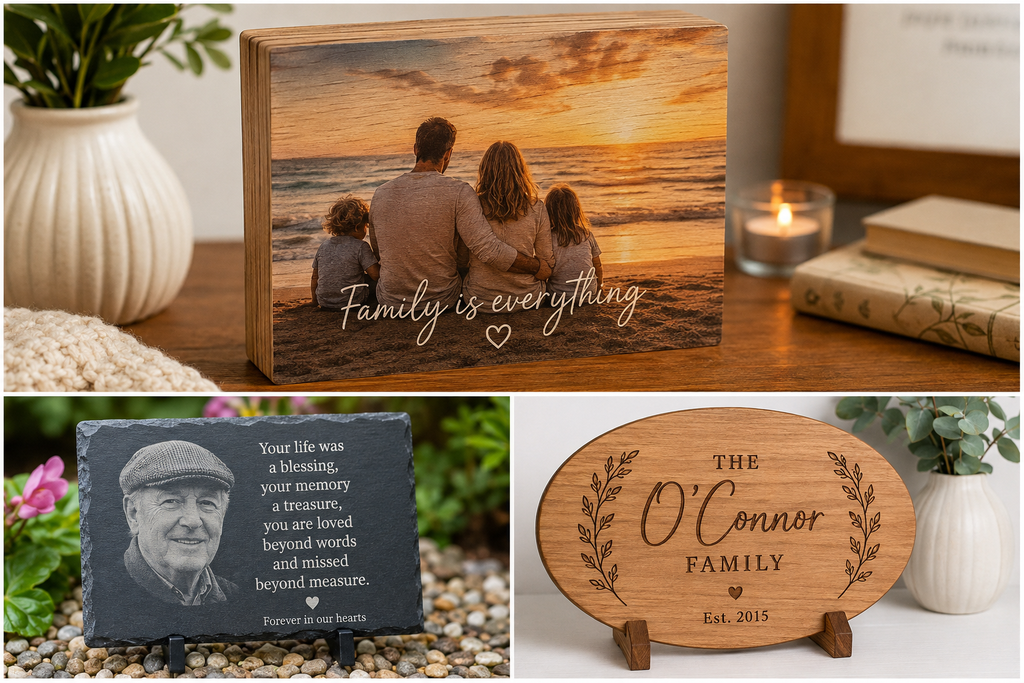
Start with one question: what should the person remember?
Before checking pixels, resolution or filters, decide what the gift is supposed to bring back.
A personalised gift is not improved simply because a photograph has been added to it. The image needs a reason to be there.
For a birthday gift for a parent, that might be an old photograph of the children when they were young. For an anniversary, it could be the wedding day—or it could be the place where the couple first met. For retirement, the best image might not be a formal portrait at all. A photograph connected to years of work, colleagues or a shared achievement could tell a much better story.
This matters when choosing a personalized plaque for gifts. The most flattering photograph is not automatically the most meaningful one.
Think about what happens when the recipient sees it.
Do you want them to say, “That’s a lovely photo”?
Or do you want them to immediately remember where they were, who was there and why that moment mattered?
Choose the second one.
Don’t automatically choose the highest-quality photo
Image quality matters. It would be silly to pretend otherwise.
A photograph that is extremely blurry, heavily pixelated or badly underexposed will limit what can be reproduced clearly. Photo-gift guidance from specialist sellers also consistently recommends using the original image where possible and avoiding heavily compressed screenshots or downloads.
But quality and meaning are not the same thing.
An old family photograph may be softer than a modern smartphone image. It may have a strange colour cast. It may even show signs of age.
That does not automatically make it a poor choice.
If that photograph captures someone who is no longer here, a childhood home that has changed, or a family gathering that cannot be repeated, its value comes from the memory—not from having perfect technical settings.
The better question is:
Can the important part of this photograph still be seen clearly?
If the answer is yes, don’t dismiss it too quickly.
For an old or damaged image, check the condition with the maker before assuming it will reproduce exactly as you expect. Quirky Designs’ ordering process invites customers to upload a favourite photo and personalise the finished piece with names, dates or a special message.
Look at the subject before you look at the background
People frequently choose a photograph because the whole scene feels special.
Then the image gets cropped.
Suddenly, the person’s face is near the edge. The pet has disappeared. Half the wedding dress is gone.
This is where you need to think about the shape of the finished product, not just the original photograph.
A close portrait gives you more flexibility because the main subject is already obvious. A wider landscape image needs more careful matching to the available format.
Before ordering, ask yourself:
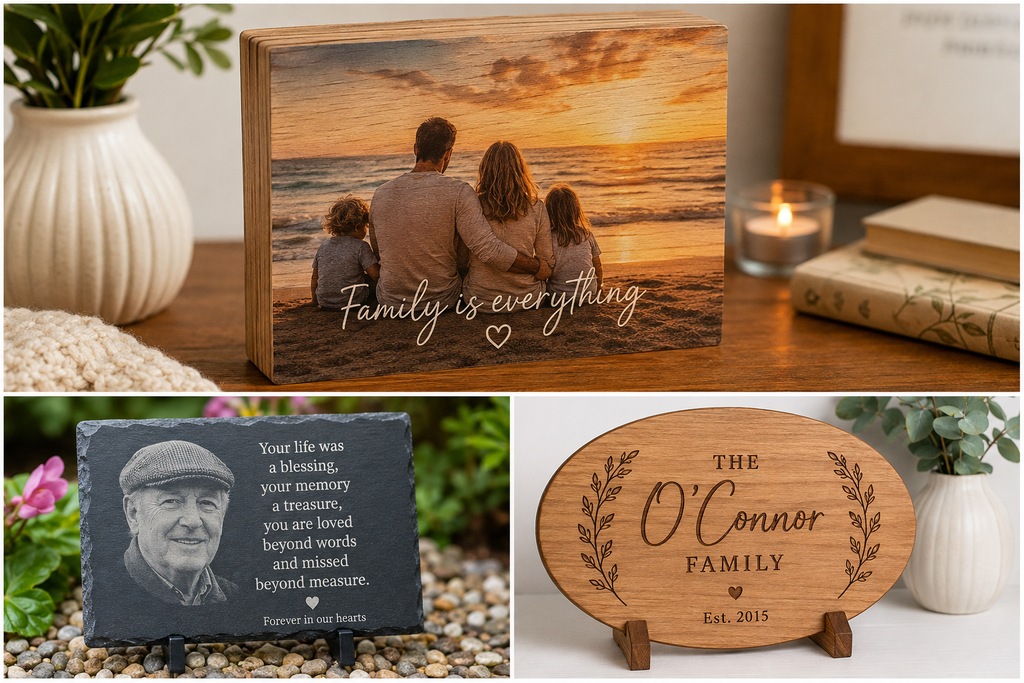
If this image had to lose 20% of its edges, would the photograph still work?
You do not need to calculate that precisely. Just imagine the crop.
If removing part of the top, bottom or side destroys the composition, choose another photograph or another product format.
This is particularly important for a personalised plaque with picture. The image is being turned into a physical object with fixed proportions. You are no longer looking at an endlessly expandable phone screen.
Group photos are harder than people think
A group photograph can make a brilliant personalised gift.
It can also become a tiny collection of faces that nobody can properly see.
The problem is scale.
If six or eight people are standing far from the camera, their faces may look perfectly fine on a large screen. Once the image is reproduced on a smaller plaque or keepsake, those details become much less prominent.
For a group photo, check three things:
Are the faces large enough to recognise?
Is everyone who matters likely to remain visible after cropping?
Is there one obvious focal point?
If the answer to all three is yes, use it.
If not, look for a tighter version of the same moment.
A personalised gift does not need to document every person who attended an occasion. It needs to preserve the memory properly.
The best photo for a photo block is not always the best one for a plaque
This is where the product itself should influence the choice.
Quirky Designs sells personalised photo blocks and describes its custom photo blocks as being printed on premium furniture-grade Baltic birch ply using UV printing technology. The site also offers personalised plaques, memorial plaques and pet memorial products.
That gives you different ways to use the same memory.
A photo block is a strong choice when the image itself is the main attraction. Family photographs, pets, holiday moments and portraits work well when you want the photograph to feel like part of the décor.
The natural character of wood also changes the presentation. You are not simply putting a picture behind glass.
A personalised plaque makes more sense when the photograph shares space with another message: a name, date, tribute, retirement message or other wording.
That distinction matters.
If the words are as important as the image, leave room for them. Don’t choose a photograph where every inch of the composition is busy and then try to place text over somebody’s face.
For a retirement gift, choose the story of the career
A personalized plaque for retirement does not have to use the standard formal headshot.
Honestly, that is usually the least interesting option.
Think about what the person actually spent their working life doing.
A photograph with colleagues may be more meaningful. So might an image from a major project, an office tradition, a work anniversary or a team event.
If the plaque is intended as a formal award from an employer, a more polished image or company-related visual may suit the occasion better. Engraved plaque suppliers also position personalised plaques around milestones, recognition and award uses, alongside door and desk applications.
The photo should match the tone of the gift.
Warm and personal? Choose the memory.
Formal and commemorative? Choose the person or achievement.
Memorial photos deserve a slower decision
Don’t choose the first photograph you find.
For a memorial plaque, look through the photographs with the finished tribute in mind.
A good choice is usually one where the person is recognisable, the expression feels natural and the image reflects how the family remembers them. It does not need to be a professional portrait.
MemorialPlaques.ie, for example, builds several of its portrait plaque products around uploading a personal photograph and combining it with an inscription, with different shapes available for different layouts.
The mistake is treating the photograph as a technical requirement.
It is the centre of the memory.
Take a little longer deciding.
If the photograph contains several people, ask whether the memorial is really about one person. If it is, a different image may create a clearer and more personal tribute.
For a pet memorial, the same principle applies. Choose the photograph that looks most like the animal you remember—not necessarily the one with the nicest background.
Old photos can be better than new ones
This deserves saying again because modern photo advice gets obsessed with resolution.
Some of the most meaningful personalised gifts start with photographs that would never win a photography competition.
A faded picture of grandparents outside their first home.
A slightly grainy photograph of a family holiday.
A scanned image from a photo album.
Those photographs carry history.
If you have both a technically perfect image and an older image with a stronger connection to the recipient, I would usually choose the meaningful one—as long as the main subject remains clear enough for the chosen product.
A personalised gift should not feel like stock décor.
The little imperfections are sometimes part of why the photograph matters.
Avoid these photo mistakes before placing an order
There are a few problems that are worth catching before you upload anything.
Don’t use a screenshot if you have the original photograph. Screenshots and images downloaded from social platforms may have reduced detail or compression compared with the original file.
Don’t crop too aggressively before uploading. You might remove part of the image that would have given the maker more flexibility with the final composition.
Don’t put important faces at the extreme edge. They are the first things likely to cause trouble in a crop.
Don’t cover the whole photograph with text. A name and date are usually enough. Let the image breathe.
Don’t choose a group photo just because everybody was present. If the faces are tiny, the memory will be harder to recognise.
Don’t over-edit the image. Heavy filters can make a photograph feel dated very quickly.
And one more.
Don’t spend an hour comparing twenty nearly identical photos. If one image immediately brings the right memory back, that reaction is worth trusting.
What about a photo of a place instead of a person?
Absolutely.
Sometimes a place says more than a portrait.
A childhood beach. A hometown. A favourite Irish landmark. The house where someone grew up. A wedding venue. The view from a holiday everyone still talks about.
Quirky Designs also offers local-image photo blocks alongside customer-uploaded personalised products, making place-based memories a natural fit for the brand’s product range.
This approach works particularly well for someone who is difficult to buy for.
Instead of asking, “What do they need?”, ask:
“What place would they recognise immediately?”
That is usually a better starting point.
Tree, door and award plaques need a different approach
Not every personalised plaque is a photo gift.
For a personalized plaque for tree, a door plaque or an award, the photograph may be unnecessary altogether. Signomatic’s engraved plaque guidance specifically separates practical applications such as door and desk plaques from commemorative and award plaques, and notes that photographic detail is not always suitable for engraved formats.
That is an important distinction.
If the purpose is identification, recognition or wayfinding, clarity beats sentiment.
For a door plaque, keep the information readable.
For an award, make the recipient’s name and achievement easy to see.
For a tree dedication or commemorative marker, choose wording that still makes sense without needing a photograph to explain it.
A photo should be used because it adds something—not because personalisation feels incomplete without one.
My final recommendation: choose the photo people would ask about
Here is the simplest test I know.
Imagine the personalised gift sitting in someone’s home five years from now.
Which photograph would make somebody stop and ask, “Where was that taken?”
Which one would make the recipient tell the story again?
Start there.
Choose the clearest version you have. Check that the important subject will survive the crop. Match the photograph to the shape and purpose of the finished piece.
Then stop looking for perfection.
For personalised plaques Ireland shoppers are buying as gifts, memorials or keepsakes, the strongest photograph is rarely just the prettiest one. It is the image that still means something after the moment has passed.
If you already have that photo, is a good place to decide what form the memory should take.