

Slate Pet Memorial Plaques
For many people, a pet is far more than an animal living in the family home.
They are there when you come back from work, sit beside you on quiet evenings, greet you at the door and somehow know when you need company. Dogs, cats and other companion animals become part of everyday routines—and eventually part of the family story.
That is why losing a pet can leave such a noticeable gap.
While memories remain, many pet owners look for a meaningful way to keep those memories visible. From photographs and paw-print keepsakes to garden tributes and slate pet memorial plaques, there are now many thoughtful ways to remember an animal that meant so much.
The goal is not to erase the sadness.
It is to celebrate the life that came before it.
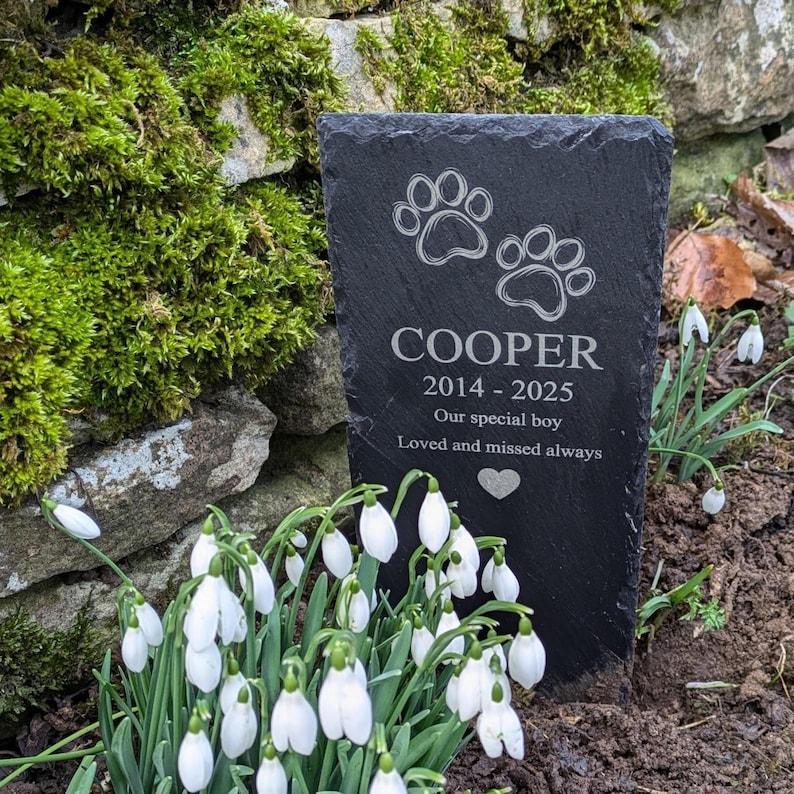
Why are pet memorials becoming more meaningful?
A pet memorial is ultimately about celebrating the relationship built over years. That relationship begins with responsible care, companionship and attention to animal welfare. The ISPCA’s guidance on responsible pet ownership offers useful information on the responsibilities that come with caring for an animal.
Pet memorials give owners a physical way to remember a companion after they are gone. They can turn a favourite photograph, name or message into something that remains part of the home or garden.
The relationship between people and companion animals has changed considerably over the years.
Pets are increasingly treated as members of the household rather than simply animals kept for practical purposes. The European Pet Food Industry Federation (FEDIAF) reports that millions of European households live with companion animals, reflecting the significant role pets play across Europe. (fediaf.org)
That emotional connection explains why traditional sympathy gestures do not always feel sufficient after a pet dies.
A memorial can offer something different.
It provides a place to remember.
For questions about a pet’s health or wellbeing, owners should always seek advice from a qualified veterinary professional. Veterinary Ireland provides information and represents veterinary practitioners across Ireland.
What makes a pet memorial different from an ordinary decoration?
A pet memorial carries a personal story, while ordinary decoration is usually chosen mainly for appearance. The name, photograph, dates or message can make the memorial directly connected to one particular animal.
Think about a garden stone with a pet’s name engraved on it.
It may look simple.
But to the owner, that name could represent fifteen years of walks, muddy paws, birthdays, holidays and countless ordinary mornings.
That is what gives a memorial its significance.
The physical object does not need to be elaborate.
The memory does the heavy lifting.
Why are slate pet memorial plaques a popular choice?
Slate has a natural, understated appearance that can suit both indoor remembrance spaces and outdoor gardens. Its stone-like character also fits naturally with the idea of a permanent tribute.
Slate is a fine-grained metamorphic rock formed from an original shale-type sedimentary rock through low-grade metamorphism. Its natural cleaving properties have made it useful historically for roofing, flooring and other applications. (Britannica)
For memorial products, its natural variation can contribute to a distinctive appearance.
No two pieces of natural stone need to look exactly alike.
That can actually make a memorial feel more personal.
A pet was unique.
The tribute can be too.
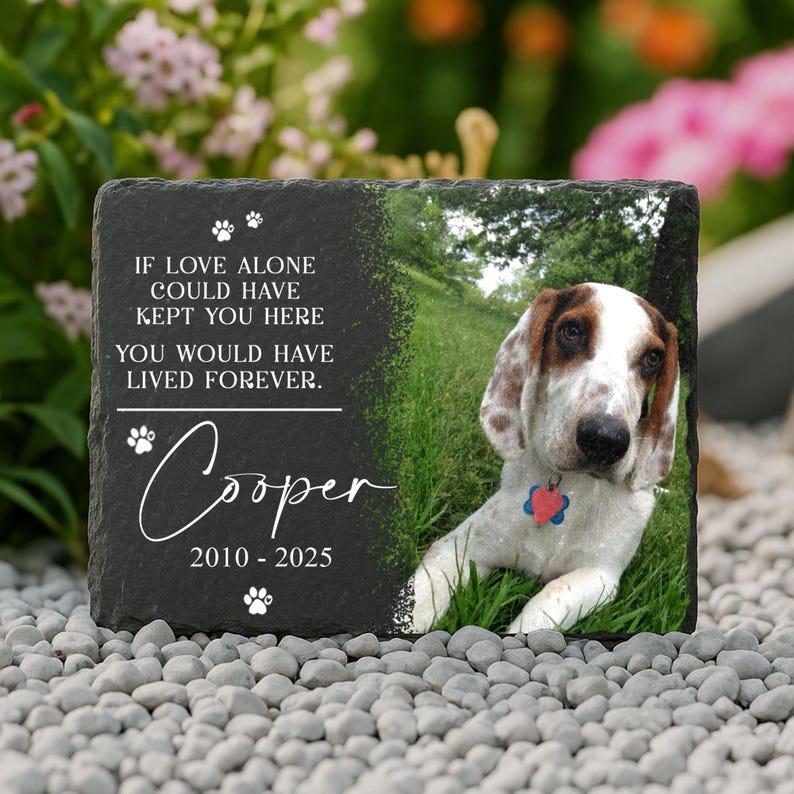
How can you personalise a pet memorial plaque?
The most meaningful personalisation usually combines the pet’s name with one or two details that genuinely capture their personality or place in the family.
Possible details include:
- Pet’s name
- A favourite photograph
- Birth and passing dates
- A short message
- A paw-print design
- A favourite saying
- A simple illustration
- A reference to a favourite place
- The family’s name
For example:
Max
Forever loved, never forgotten
2009–2025
Or something more personal:
Bella
Our walks were never just walks.
Always in our hearts
The wording does not have to be complicated.
In fact, short messages often feel more sincere.
Should a pet memorial include a photograph?
A photograph can make a memorial particularly personal because it immediately brings the animal’s appearance and personality to mind. Choose an image that represents the pet naturally.
The “best” photograph does not have to be professionally taken.
It might be the picture where your dog is sitting in the garden.
It might be the photograph of your cat sleeping in its favourite chair.
It might be an old picture from the first week you brought them home.
Look for an image that makes you remember the animal rather than simply showing them at their most photogenic.
That distinction matters.
A memorial is about the relationship, not a photography competition.
What should you write on a pet memorial?
Keep the message short enough to read easily but personal enough to mean something.
Some owners prefer traditional phrases such as:
- Forever loved
- Always remembered
- Forever in our hearts
- Never forgotten
- Until we meet again
Others prefer something more specific.
A dog known for stealing socks might inspire a playful message.
A cat famous for sleeping in every sunny spot might deserve a reference to that habit.
A rescue pet might have a message celebrating the second chance they received.
There is no requirement to make the wording solemn.
Grief and love can coexist with humour.
Sometimes remembering the funny things is one of the most comforting parts of remembering a pet.
Where can you place a pet memorial plaque?
The best location is somewhere connected with the pet or somewhere the family naturally spends time.
A garden is an obvious choice.
If the pet loved sitting beneath a particular tree, that location could become especially meaningful.
Other possibilities include:
A favourite garden spot
A memorial can become part of a planting area or quiet corner of the garden.
Near a pet’s favourite place
Perhaps they always waited beside the back door or slept beneath a particular tree.
Indoors
A plaque can also sit alongside photographs, collars, toys or other keepsakes.
A dedicated memory area
Some families create a small shelf or display containing photographs and meaningful objects.
There is no single correct approach.
The right place is simply somewhere that feels comfortable to the people remembering the pet.
Why is the garden such a popular place for pet remembrance?
Gardens offer a peaceful outdoor environment where a memorial can become part of a living landscape. Plants, flowers and natural surroundings can create a gentle setting for remembrance.
A garden also changes over time.
Flowers bloom.
Trees grow.
Seasons come and go.
That natural cycle can make an outdoor memorial feel less like a static monument and more like a continuing part of the home.
Some owners may choose to place a memorial near a favourite plant or create a small remembrance garden.
A plaque can provide the permanent element while the surrounding plants change with the seasons.
It is a simple combination of memory and nature.
Can a pet memorial be beautiful without looking overly sad?
Yes. A memorial can celebrate a pet’s life rather than focusing exclusively on loss. The design, photograph and wording can reflect happiness, personality and companionship.
This is particularly important for people who want a memorial in a visible part of the home.
A dark or highly formal design may not suit every family.
A natural slate finish with a favourite photograph and a simple message can feel quieter.
For a playful pet, a light-hearted message may be more appropriate.
For an older family dog, a classic and understated design may feel right.
The best memorial reflects the animal.
How can photographs help preserve a pet’s memory?
Photographs capture details that memory can gradually blur, from the shape of a face to a familiar expression or favourite sleeping position.
Pet photography has become remarkably easy.
Almost everyone carries a camera in their pocket.
As a result, owners often have hundreds—or thousands—of photographs of their pets.
The challenge is deciding which ones matter most.
A memorial can encourage that selection.
Instead of scrolling endlessly through a phone gallery, an owner chooses one photograph that represents the pet’s personality.
That image then becomes part of the physical home.
A digital photograph becomes a visible memory.
What are some creative alternatives to traditional pet memorials?
Pet remembrance does not have to follow one format, and combining several small keepsakes can create a more personal tribute.
Ideas include:
- Framed photographs
- Paw-print impressions
- Personalised plaques
- Garden memorials
- Memory boxes
- Engraved keepsakes
- Custom illustrations
- Pet collars displayed with photographs
- Memorial plants
- Personalised ornaments
Some owners may create a small collection rather than relying on one item.
For example, a photograph could sit indoors while a memorial plaque marks a favourite garden spot.
The important thing is that the tribute feels appropriate to the individual pet.
How can you choose a meaningful photograph for a memorial?
Choose an image that makes you think of the pet’s personality and the relationship you shared. Technical quality matters, but emotional significance matters more.
Ask yourself:
Does this photograph look like them?
Does it capture their personality?
Does it remind me of a particular memory?
Would I smile when I saw it?
That last question is particularly useful.
A memorial does not have to make you sad every time you look at it.
Ideally, it can eventually become a reminder of the good years as well.
Why does personalisation matter when remembering a pet?
Personalisation transforms a general memorial product into something that belongs to one specific animal and one specific family.
A plaque that simply says “Beloved Pet” could apply to thousands of animals.
Add a name, photograph and meaningful dates, and suddenly it can only belong to one.
That uniqueness is important.
Pets have individual personalities.
Some are energetic.
Some are stubborn.
Some follow their owners everywhere.
Some act as though the house belongs entirely to them.
And, honestly, they may have a point.
A personalised memorial allows those individual stories to remain part of the family’s physical environment.
Are pet memorials only for dogs and cats?
No. Any companion animal that has played an important role in someone’s life can be remembered through a personalised tribute.
Dogs and cats may be the most common household companions, but families also form strong bonds with rabbits, birds, guinea pigs, horses and other animals.
The principle remains the same.
The memorial should reflect the relationship.
A horse’s memorial might mention a favourite stable or field.
A rabbit’s tribute might feature a favourite photograph and a playful message.
A bird’s memorial could celebrate years of companionship.
The format can change.
The emotional purpose remains.
How can a pet memorial become part of family history?
A well-designed memorial can preserve the name and story of a pet for people who knew them—and for family members who may only know them through photographs.
Children, in particular, can form strong attachments to family pets.
When a pet dies, the loss can become an important family memory.
A memorial provides a physical reference point.
Years later, a child might see the plaque and ask about the pet.
That creates an opportunity to tell stories.
“That was Molly. She used to sleep beside the fireplace.”
“That was Ben. He came everywhere with us.”
“That was Charlie. He was terrified of the vacuum cleaner.”
Suddenly, the memorial is doing more than marking a name.
It is keeping stories alive.
What should you check before ordering a pet memorial plaque?
Check the spelling, dates, photograph and final design carefully before placing an order. A memorial is something you will likely keep for a long time, so accuracy matters.
Pay particular attention to:
Name: Make sure your pet’s name is spelled correctly.
Dates: Check birth and passing dates if you want them included.
Photograph: Choose the correct image and use the best available quality.
Message: Read the wording carefully.
Size: Consider whether the plaque will be displayed indoors or outdoors.
Placement: Think about where it will ultimately go.
Taking a few minutes to check these details can prevent avoidable mistakes.
How can pet owners create a lasting tribute without overcomplicating it?
Start with one memory, one photograph and one meaningful message. You do not need to create an elaborate memorial to honour an animal properly.
Choose the photograph that instantly reminds you of them.
Add their name.
Include the dates if they feel important.
Then choose a short message.
That may be all you need.
The simplicity can actually make the tribute stronger.
A memorial does not need to explain an entire lifetime.
Sometimes one name is enough to bring the whole story back.
The lasting meaning of a pet memorial
Losing a pet can change the atmosphere of a home.
The familiar footsteps disappear.
The food bowl remains empty.
The usual greeting at the door does not happen.
Those small routines can be surprisingly powerful reminders of how much space an animal occupied in everyday life.
A memorial cannot replace that companionship.
But it can give those memories somewhere to remain.
Slate pet memorial plaques offer one option for creating a lasting tribute that combines a natural material with personal details such as a name, photograph, dates or message.
More importantly, the plaque represents something bigger than the material itself.
It represents the years shared.
The walks.
The games.
The quiet evenings.
The funny habits.
The unconditional companionship.
And all those ordinary moments that never seemed extraordinary until they were gone.
A pet may only be part of your life for a number of years.
But the memories they leave behind can last much longer.
A thoughtful memorial simply gives those memories a place to stay.